
You eat less than your friends. You walk every day. The weight still will not move, and your periods are all over the place. If that is your life, you are not lazy and you are not doing it wrong.
Why PCOD makes weight loss harder — and what changes it
Polycystic Ovarian Disorder changes how your body handles insulin. When insulin stays high, the body is told to store fat rather than release it, particularly around the abdomen. That is why the same diet that works for a friend may do very little for you, and why eating even less often makes things worse.
The hormonal side matters just as much. Irregular cycles, acne, unwanted facial hair and hair thinning are usually part of the same picture. Working on weight while ignoring the hormones is why many women lose a few kilos and regain them within months.
What women usually come to us with
Weight that sits mostly around the stomach. Periods that skip two or three months. Acne appearing in the late twenties. More hair in the drain, and more on the face. Exhaustion by mid-afternoon. Cravings that feel impossible to argue with.
Most have already tried three or four diets found online, and several have simply been told to lose weight without anyone explaining how.
PCOD diet: what usually helps
The aim with a PCOD diet is steadier insulin rather than fewer calories. Broad principles that tend to help:
Build each meal around protein — eggs, dal, paneer, curd, chicken or fish. Protein blunts the sugar spike that follows a carbohydrate-heavy plate.
Do not remove rice or roti entirely. Reduce the portion, and always eat it after the protein and vegetables rather than first. The order genuinely changes the glucose response.
Choose whole over refined where you can — millets, brown rice, whole wheat instead of maida, biscuits and bakery items.
Eat something within an hour of waking. Skipping breakfast then overeating at night is one of the most common patterns we see, and it works against you.
Add fibre at every meal. Vegetables, salad, sprouts. It slows sugar absorption and helps the fullness that PCOD often blunts.
Be careful with fruit juice, sweetened tea and coffee, and the late-night sweet. Liquid sugar is the fastest route to an insulin spike.
Walk for ten minutes after dinner if you can. It is a small habit with a measurable effect on post-meal sugar.
These are general suggestions, not a prescription. Every person's needs differ, and if you have a medical condition or take regular medication, changes to your diet should be discussed with your doctor or a qualified dietician first.
What LIFE offers for this
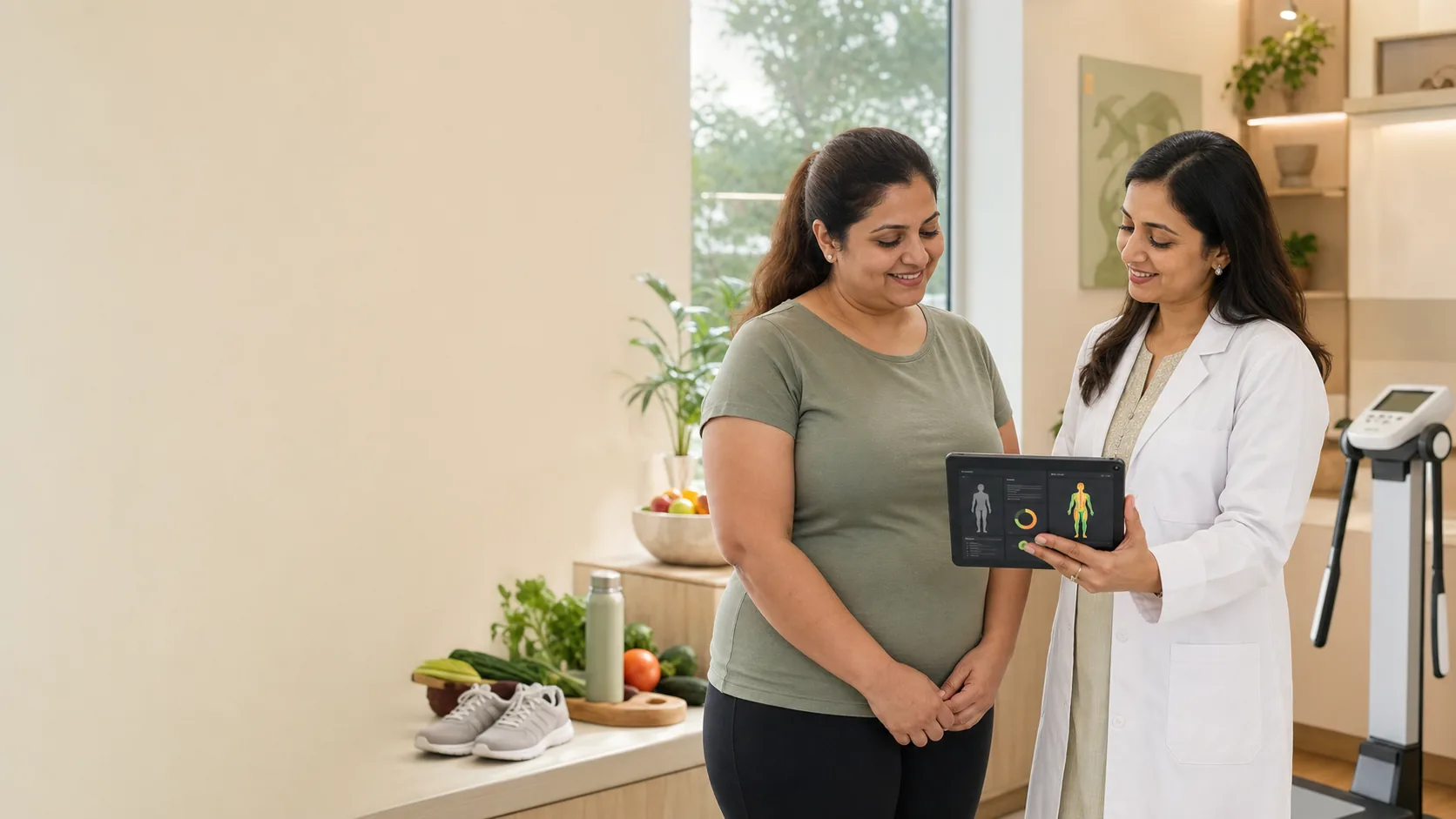
A consultation is where a doctor or dietician decides what actually suits you. Depending on that assessment, the options at LIFE may include:
Dietician and clinical diet consultation — a PCOD-specific plan built around your reports, your routine and the food you actually eat
Medical weight management — doctor-led assessment when weight has not responded to diet alone
LIFE 360° weight-loss programme — nutrition, activity and clinical support in one connected plan
Inch loss and body sculpting — for localised stubborn areas, once overall health is being addressed
Free body-age check — a quick starting point before you decide anything
Nothing is recommended without an assessment first, and there is never any obligation to buy a treatment at the consultation.
About GLP-1 medicines
You will have seen weight-loss injections discussed a great deal. GLP-1 medicines can support weight management for some people. They are prescription treatments requiring a doctor's assessment, monitoring and follow-up, they are not suitable for everyone, they carry side effects, and they are never a stand-alone answer.
At LIFE they are considered only where a qualified doctor decides they are clinically appropriate for you, alongside nutrition and lifestyle work.
What we will not tell you
Nobody can say in advance how much weight you will lose, and you should be wary of anyone who does. What a proper assessment can do is explain why your body is holding on to it, and be honest about what is realistic for you.
Visiting LIFE Banjara Hills
If you have been looking for a weight loss clinic or dietician near you in Banjara Hills, our Banjara Hills centre serves Banjara Hills, Road No. 12 and the Jubilee Hills side and the surrounding parts of Hyderabad. Call +91 95334 45566 to book an assessment, or get directions and read reviews here: View on Google Maps
Prefer to ask a few questions first? Use the LIFE AI chat on this page. It answers common questions, and if you leave your name and number it sends you a personal discount coupon you can use on an eligible treatment or programme after your consultation. The amount and the last date are printed on the coupon itself.
Suitability and results vary from person to person. A professional assessment is required before any treatment, and nothing here is a promise of a particular outcome.
About this article: this is general health information published by LIFE Clinics to help people understand a common concern. It is not medical advice, not a diagnosis, and not an advertisement for any medicine or treatment. No outcome is promised or implied. Please consult a qualified doctor about your own health.