
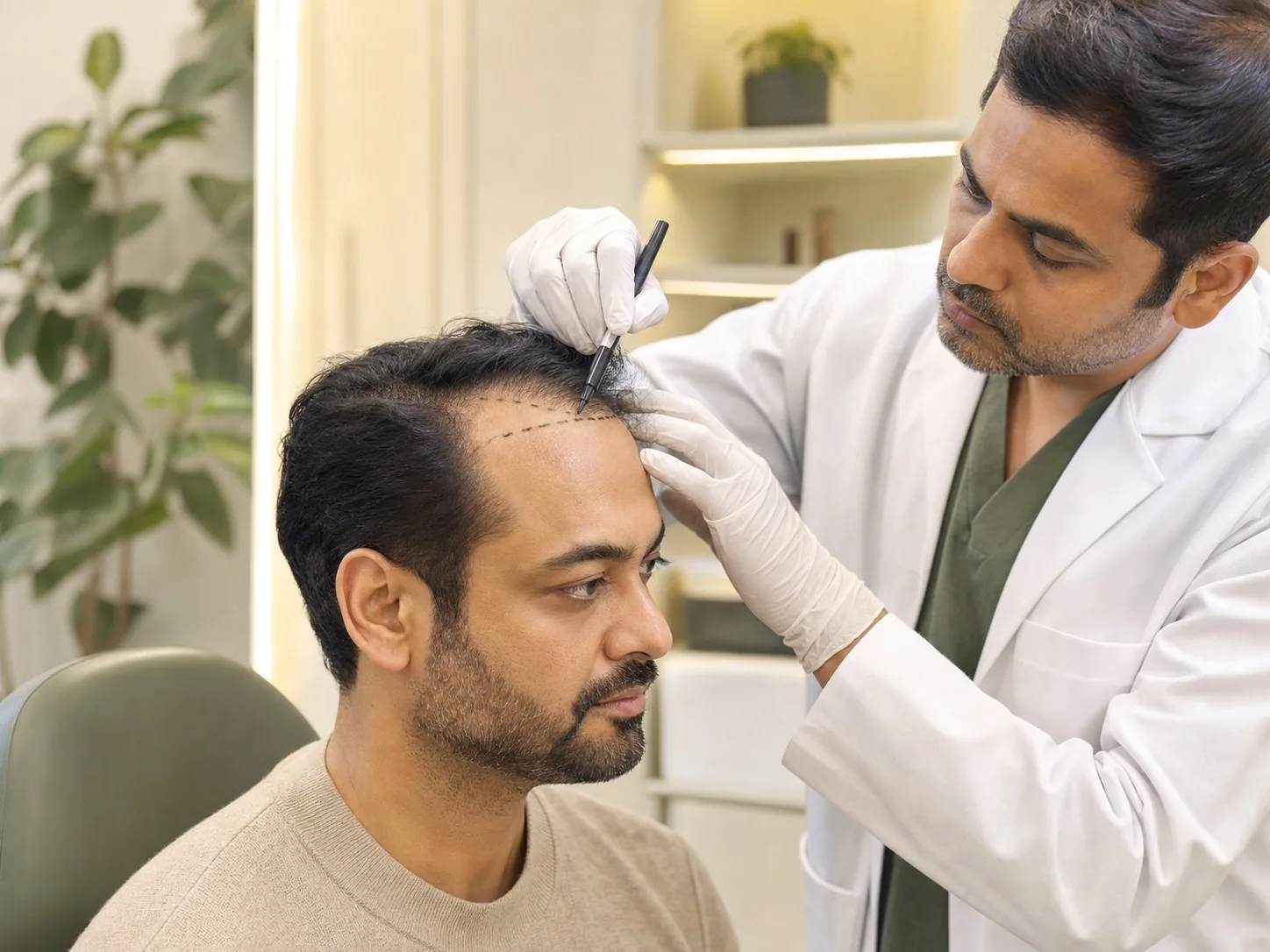
Hair loss can affect your confidence and self-image. If you've tried treatments without success, hair transplantation might be worth exploring. At LIFE Clinics, our dermatologists and hair specialists help you understand your options and choose the right approach for your unique situation.
Why Consider Hair Transplantation?
Hair transplantation is a surgical procedure that moves healthy hair follicles from areas where hair grows well to areas that are thinning or bald. It works because transplanted hair retains its original growth pattern and longevity. This makes it a long-lasting solution for many people experiencing pattern baldness or hair loss from injury or medical conditions.
The procedure is semi-permanent—the transplanted hair typically continues growing for life, though results vary from person to person.
When Should You Consider Hair Transplantation?
Not everyone is a candidate for hair transplantation. Our doctors assess whether you are suitable based on several factors.
You may benefit from this treatment if you have stable hair loss (not rapidly progressing), sufficient donor hair in areas like the back of your scalp, realistic expectations about outcomes, and good overall health. Hair transplantation works best when you've tried medical treatments first or prefer a permanent solution.
Timing matters too. Most specialists recommend waiting until your hair loss pattern stabilizes before surgery. Transplanting hair into an area still losing hair can lead to disappointment. A consultation with LIFE's dermatologists helps determine if now is the right time for you.
Main Hair Transplantation Methods
FUT—Follicular Unit Transplantation
FUT, also called the strip method, involves removing a thin strip of scalp from the donor area (usually the back of your head). Hair follicles are then separated under a microscope and individually transplanted into the balding areas.
This method extracts many grafts efficiently and is often more affordable. However, it leaves a linear scar at the donor site, which can be visible if you wear very short hair. Recovery takes 1–2 weeks, and results appear gradually over several months.
FUE—Follicular Unit Extraction
FUE is a minimally invasive method where individual hair follicles are extracted directly from the scalp using a small circular punch tool. Each graft is then placed into the recipient area.
This technique leaves no linear scar, making it ideal if you prefer short hairstyles. However, it is more time-intensive and typically costs more than FUT. The procedure may take longer, but many people prefer the reduced scarring.
DHI—Direct Hair Implantation
DHI is an advanced variation of FUE that uses a specialized pen-like tool called a Choi implanter. Hair follicles are extracted individually, loaded into this implanter, and directly placed into the scalp at precise angles and depths without creating recipient sites beforehand.
DHI offers excellent control over hair direction, density, and natural appearance. Because follicles spend minimal time outside the body, graft survival rates are often higher. The downside is that DHI requires significant skill and time, making it more expensive than standard FUE.
How LIFE Clinics Performs Hair Transplantation
At LIFE Clinics, every hair transplantation begins with a thorough consultation. Our dermatologists examine your scalp, assess your hair loss pattern, evaluate donor hair availability, and discuss your goals and expectations.
Based on this assessment, your doctor recommends the most suitable method—FUT, FUE, or DHI—tailored to your needs, hair type, and budget.
On the day of the procedure, your scalp is numbed with local anesthesia, so you remain awake but comfortable. The extraction and transplantation process is meticulous and can take several hours depending on the number of grafts needed.
Our team focuses on placing each follicle at the correct angle and density to match your natural hair growth pattern and create a hairline that looks natural.
What to Expect After Treatment
After hair transplantation, you'll see some redness and swelling, which typically fades within days. Transplanted hair may shed initially—this is normal and temporary. New growth usually begins within 3–4 months, with fuller results visible by 9–12 months.
Your doctor provides clear aftercare instructions, including when to wash your hair, avoid strenuous activity, and protect your scalp from sun exposure. Following these guidelines helps optimize healing and graft survival.
Is Hair Transplantation Safe?
Hair transplantation is generally safe when performed by qualified dermatologists in a hygienic setting. At LIFE Clinics, our doctors follow strict safety protocols and use sterile instruments.
As with any surgical procedure, minor risks include infection, temporary numbness, or unsatisfactory aesthetic results. Serious complications are rare when the procedure is done professionally. During your consultation, your doctor discusses any risks relevant to your health.
Book Your Consultation Today
If you're experiencing hair loss and want to explore transplantation options, LIFE Clinics' team of experienced dermatologists and hair specialists is ready to guide you. We'll help you understand which method suits your situation, set realistic expectations, and create a personalized plan.
With 18 years of clinical experience across 11 centres, our approach combines medical expertise with patient care. Schedule your assessment today and take the first step toward restoring your hair and confidence.
Whichever method suits you is decided after a scalp assessment, never before it. More on how we plan a hair transplant in Hyderabad.

